First Steps to Starting a Fertility Program: The Importance of Basic Fertility Screening for Couples

Planning a pregnancy is a precious moment for every married couple. However, the journey to having a baby often requires thorough preparation and a proper understanding of each partner's reproductive health status. Quite a few couples have not succeeded in getting pregnant despite trying for some time, unaware of hidden medical issues within their reproductive organs.
Checking fertility early on is a wise step so that the fertility program (promil) can be planned efficiently, effectively, and in a targeted way. By knowing your overall health condition, a specialist doctor can provide advice and treatment best suited to the medical needs of you and your partner.
Why Is Basic Fertility Screening Important?
Many couples assume that fertility evaluations are only necessary after years of marriage. In fact, earlier medical evaluation can save time and prevent delays in medical treatment. Basic fertility screening aims to evaluate the function of both male and female reproductive organs.
Some main reasons why early fertility evaluation is important include:
- Early Detection of Reproductive Issues: Knowing precisely whether there are obstacles, such as ovulation problems, blocked fallopian tubes, or sperm quality issues.
- Evaluations Done as a Couple: Reproductive issues do not come solely from the female partner. Men play an equally significant role, so tests must be conducted for both husband and wife.
- Time and Cost Efficiency: With an accurate diagnosis from the beginning, couples do not need to spend time undergoing unsuitable fertility program methods.
Common Types of Fertility Screenings
Basic fertility screenings are designed to provide a comprehensive overview of a couple's reproductive health. Here is a general overview of the screening stages commonly recommended by doctors:
1. Screening for Women
For prospective mothers, the evaluation focuses on the condition of the uterus, fallopian tubes, and hormonal functions affecting egg maturation. Common procedures include:
- Transvaginal Ultrasound: Used to detect uterine conditions, evaluate the thickness of the endometrial lining, and count follicles (egg reserve).
- Hormone Testing: Blood tests to assess reproductive hormone levels controlling the menstrual cycle and ovulation.
- Tubal Patency Test (HSG): A radiological procedure to ensure the fallopian tubes are free from blockages.
2. Screening for Men
For prospective fathers, the main test is Semen Analysis. This laboratory test evaluates several key sperm parameters, such as count (concentration), movement ability (motility), and physical shape (morphology). Optimal sperm quality is crucial to the success of egg fertilization.
Determining the Right Fertility Program Method
Once all basic screening results are obtained, the fertility specialist will help the couple determine the next steps. The choice of fertility method will be tailored to the medical conditions found:
- Timed Natural Conception: Suitable for couples without severe fertility issues, by accurately monitoring the woman's fertile window.
- Intrauterine Insemination (IUI): An option if sperm needs assistance getting closer to the egg, or if there are mild cervical obstacles.
- In Vitro Fertilization (IVF): Recommended if both fallopian tubes are blocked, there is severe sperm quality decline, or other fertility factors requiring fertilization in a laboratory.
Direct Discussion and Consultation Regarding Fertility Programs
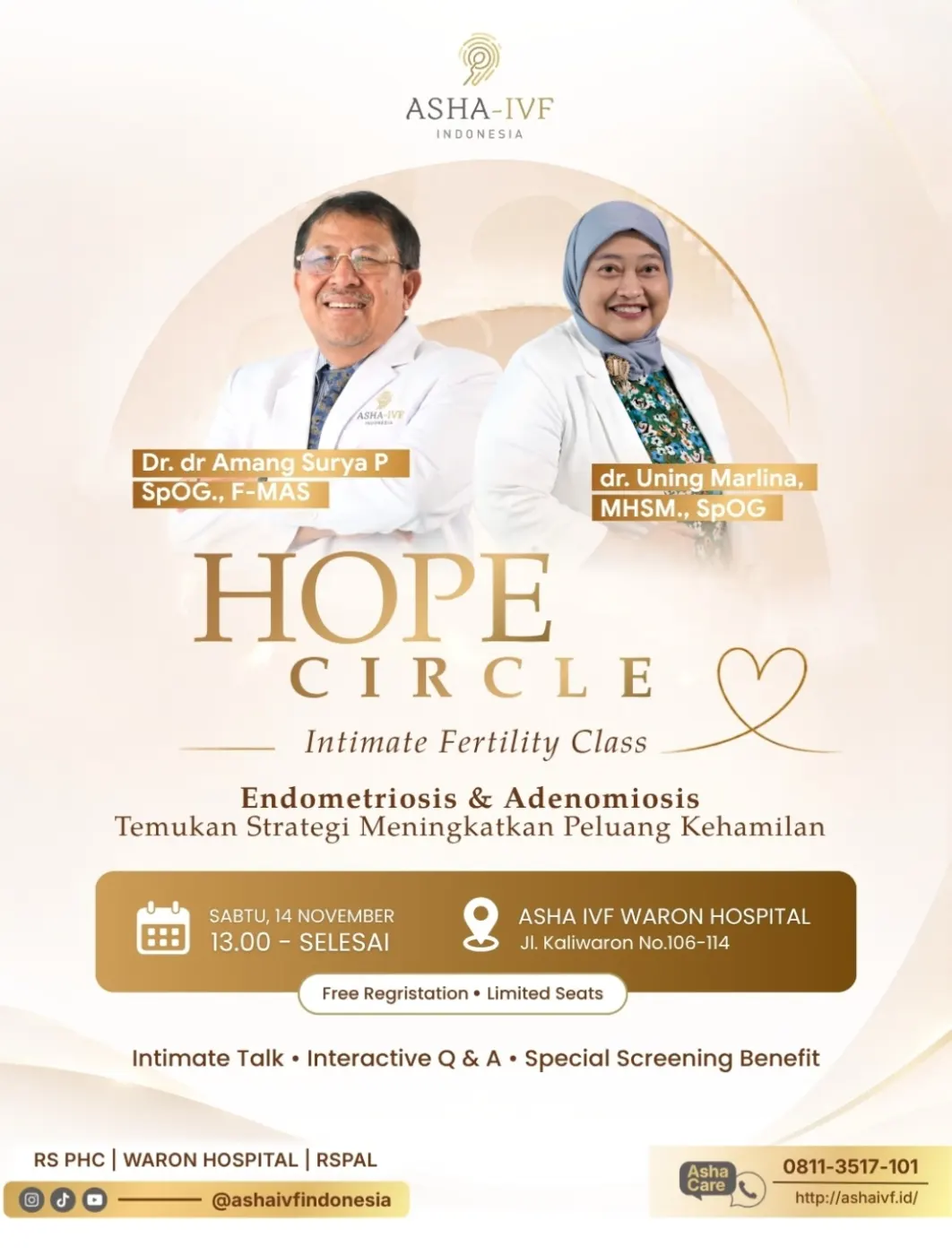
Starting a fertility journey requires accurate information from trusted medical sources. As part of its educational and guidance commitment to the public, ASHA IVF Waron Hospital is participating in the Jawa Pos Health & Lifestyle Expo taking place on November 5–8, 2026, at the Grand Atrium, Pakuwon Mall Surabaya.
Couples planning a pregnancy can take advantage of this event to consult directly with the ASHA IVF medical team, receive initial fertility guidance, and obtain information on special offers for basic fertility screening as well as pregnancy programs. Taking the right first step will help you move forward more confidently toward your dream of having a baby.
FAQ
When should a married couple undergo a fertility screening?
Screening is recommended if a couple has not achieved pregnancy after 1 year of regular intercourse without contraception, or after 6 months if the wife is aged 35 or older.
Is it sufficient for only the wife to undergo fertility testing?
No. Fertility screening must be done by both partners, as fertility issues can affect men and women in equal proportions.
Do basic fertility screening results automatically indicate that a couple must undergo IVF?
Not necessarily. The screening results will help the doctor determine the best method suited to the couple's condition, ranging from timed natural conception, insemination, to IVF.
References
Adapted from a post by ASHA IVF on Instagram.

Would you like a consultation?
Ask the ASHA IVF team about your condition and your partner's.